Cyberspace Detective by Anand: Lesson Ideas
| Site: | ABRSM: Teacher Hub |
| Course: | Cyberspace Detective by Anand: Lesson Ideas |
| Book: | Cyberspace Detective by Anand: Lesson Ideas |
| Printed by: | Guest user |
| Date: | Saturday, 4 April 2026, 5:24 AM |
Description
Cyberspace Detective is a new commission from composer Amit Anand, it features in Grade 1 Piano Exam Pieces in 2025 & 2026 Piano syllabus.
This resource created by Karen Marshall is designed to be taught over approximately 6 weeks.
Karen Marshall has provided a resource toolkit in the style of her ABRSM Piano Star Skills Builder book. You can find some free sample pages for Karen's book here to download and please visit the ABRSM shop to purchase a copy.
By exploring these activities, you will be:
- Incorporating the other elements of the exam – sight reading, scales/arpeggios and aural skills.
- Teaching to play the piece musically with good technique.
- Using the piece to develop musicianship skills including improvising and performing with expression.
Get started by clicking left and right or using the chapter headings on the right-hand side.
1. What skills are we building?
Aural skills
This is a teacher resource to use with your pupil in conjunction with the piece. This will not only help your pupil play this piece with greater understanding and more expression, it will also help with some of the aural tests in the exam.
Reading skills
A random note reading activity is provided which incorporates all of the pitches used in the piece. In addition, there are two other reading activities, a sight reading example and another short piece for quick learning. Again, these activities practice some of the reading skills required by the Cyberspace Detective.
Technical and creative skills
This piece use elements of the chromatic scale. This resource includes activities to learn a chromatic scale but also improvise with it.
General Technical advice – top tips for teaching Cyberspace Detective
- Make sure your pupil has a good hand position and has some control and independence in their fingers before learning this piece.
- There's a good range of articulation in this piece. Make sure your pupil can identify the different sounds aurally. Demonstrate two bars at a time, hands separately and get your pupil to copy. Give detailed information on how to use the hands and the fingers to make the appropriate sound.
- Make sure your pupil avoids banging with their thumb.
- Practise playing a chromatic scale with the left-hand E to A.
- Adapt the fingering given if needed based on their technical ability and hand size/shape. The fingering is very good but may not be right for everyone.
- Double check your pupil understands how to play ties.
On the following pages, activities have been suggested in a weekly pattern. These lesson plans may move at a pace too quick or too slow for your pupil, so please feel free to amend these lesson ideas to suit your pupils' needs.
2. Week 1 & 2 - Aural activities
Background on the piece of music
The piece of music was inspired by the concept of detectives operating in cyberspace who work to prevent hackers from causing mayhem on the internet and keeping cyberspace safe. With the chromatics, spikey chords, syncopated rhythms, and dramatic dynamics there’s lots of interesting features for your pupil to hear but also see on the page.
Perform the piece of music to your pupil.
Once you've listened to the piece, discuss the following questions with your pupil:
- Does the music start loudly or quietly?
- Does the music end loudly or quietly?
- Listen as I play, can you raise your hand when the music gets louder and put it down when the music becomes quiet again?
- Is the articulation mainly smooth (legato) or detached (staccato).
- Can you clap the pulse as you listen to the music?
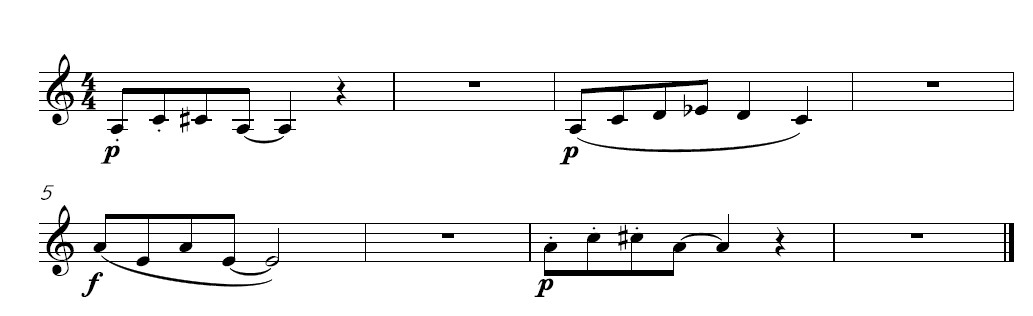
Play these extracts for your pupil and invite them to:
- Echo the rhythm (clapping)
- Echo the pitch
- Describe the articulation – smooth/detached and dynamics loud/quiet.
Show the piece of music to your pupil, and discuss the following questions with your pupil:
- What is the title of the piece of music?
- How will this affect the way you perform the piece?
- Should you play it fast or slow?
Here's an example of Karen asking one of her pupils about a piece of music they are learning together. It also incorporates some singing activities which may give you some ideas for Cyberspace Detective.
3. Week 3 & 4 – Reading
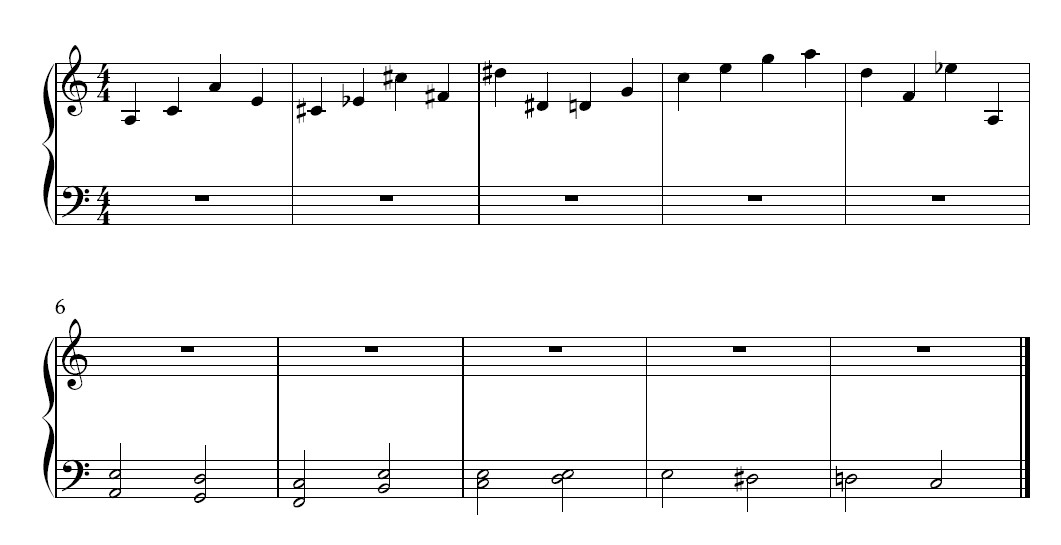
Random notation is provided to the pupil to develop their note reading skills.
You can ask your pupil to read these random notes that appear in Cyberspace Detective, and add the letter names below each note.
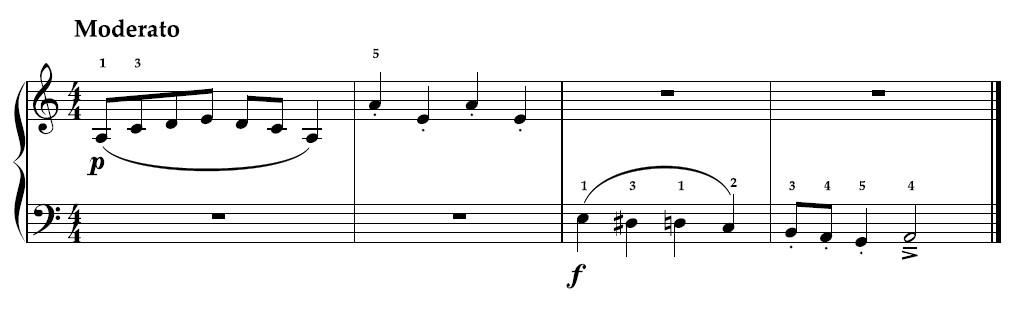
Here's a quick sight-reading example, with some similar patterns from Cyberspace Detective included.
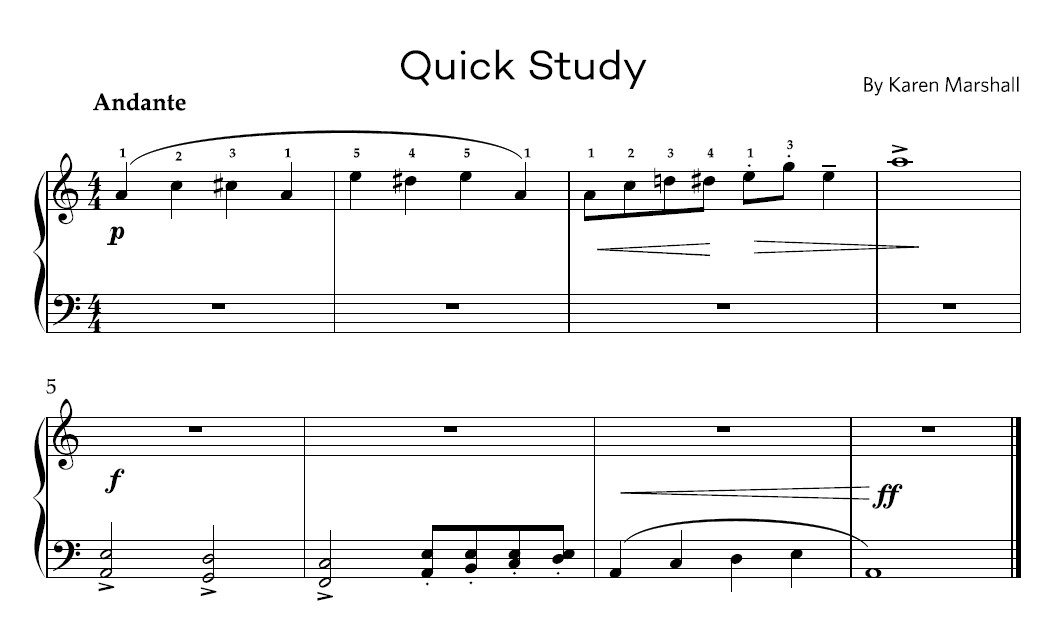
Here is a short study, with some similar patterns from Cyberspace Detective included. You may wish to give your pupil a week or so to learn this to prepare for the Grade 1 piece.
Test your pupils' understanding by making an activity sheet to accompany this piece. Here are some ideas you could include
- Naming notes from the piece, this could be via flashcards or other activities you already do in your lessons.
- Can your pupils write and explain the following note values; a crotchet, a minim, a dotted minim, a semibreve and four quavers beamed together.
- Think about the dynamics in the piece, can your pupil identify the auditory differences between mp, p, f and ff in your playing, and in their own playing? What do the symbols mean?
- Does your pupil know what c.=116 means and can they find this tempo?
- Does your pupil know what subito means?
- Can they draw, and do they understand the following terms and signs; crescendo, decrescendo, pause, tenuto, accent, tie
- Can they draw a 4/4 time signature, and do they understand what this is telling them?
4. Week 5 & 6 - fun with chromatic scales
The chromatic scale is first introduced in Grade 2 scales however, this Grade 1 piece uses elements of it. It’s super useful for a pupil to be able to play a chromatic scale well as at this level.
- Work with your pupil on the chromatic quiz activities.
- Encourage your pupil to improvise a melody that illustrates the title of the piece ‘Cyberspace Detective’. How will this affect the way they play?
The D contrary motion chromatic scale
An easy chromatic scale to start with is from D in contrary motion. The fingering is identical in both hands. It’s a good workout to strengthen the technique required (neat fingers over and under) and the finger patterns of 3rd on black notes and 1 2 3 patterns on two white notes followed by a black note. Accompany your pupil whilst they improvise using the chromatic scale. Be ready to to be very flexible with the accompaniment, changing it to fit with what your pupil is playing. Try simply playing D F# A and D, G, A triads.
Download a chromatic scale activity worksheet for your pupil on the next page.
5. Downloads
Thank you for reading our resource on Cyberspace Detective.
Please find a PDF download of all the music provided as part of this resource here.
What other ideas do you have to teach Cyberspace Detective? Share your thoughts on our padlet below. Revisit this resource at a later date to get further inspiration as more people take part in this activity.