The Bear is Sleeping: Lesson Ideas
The Bear is Sleeping is a traditional song arranged by Alan Bullard. It features in Piano Exam Pieces for Initial Grade in the 2025 & 2026 Piano syllabus.
This resource created by Karen Marshall is designed to be taught over approximately 6 weeks.
Karen Marshall has provided a resource toolkit in the style of her ABRSM Piano Star Skills Builder book. You can find some free sample pages for Karen's book here to download and please visit the ABRSM shop to purchase a copy.
By exploring these activities, you will be:
- Incorporating the other elements of the examination – sight reading, scales/arpeggios and aural skills.
- Teaching to play the piece musically with good technique.
- Using the piece to develop musicianship skills including improvising and performing with expression.
Get started by clicking left and right or using the chapter headings on the right-hand side.
2. Week 1 & 2 - Aural activities – teacher resource
Background info on the piece
This piece of music is based on a folk song. Have a look at various versions from around the world. “The Swedish folk song is also a game, where one child pretends to be the sleeping bear whilst the others walk in a circle gently singing the song. In the game the bear wakes up at the end and chases after the children, trying to catch one.”
Questions to ask your pupil:
- What is the title of the piece of music?
- How will this affect the way you perform the piece?
- Should you play it fast or slow?
- Should you play mostly loud or quiet?
- The piece is about a bear sleeping and then it wakes up. Do you think the music should be loud or quiet when the bear wakes up?
Perform the piece of music to your pupil.
Once you've listened to the piece of music, explore the following questions with your pupil.
- Does the music start loudly or quietly?
- Does the music end loudly or quietly?
- Listen as I play, can you raise your hand when the music gets louder and put it down when the music becomes quiet again?
- Does the music get faster or slower at the end?
- Can you clap the pulse as you listen to the music?
Creating an echo-singing activity
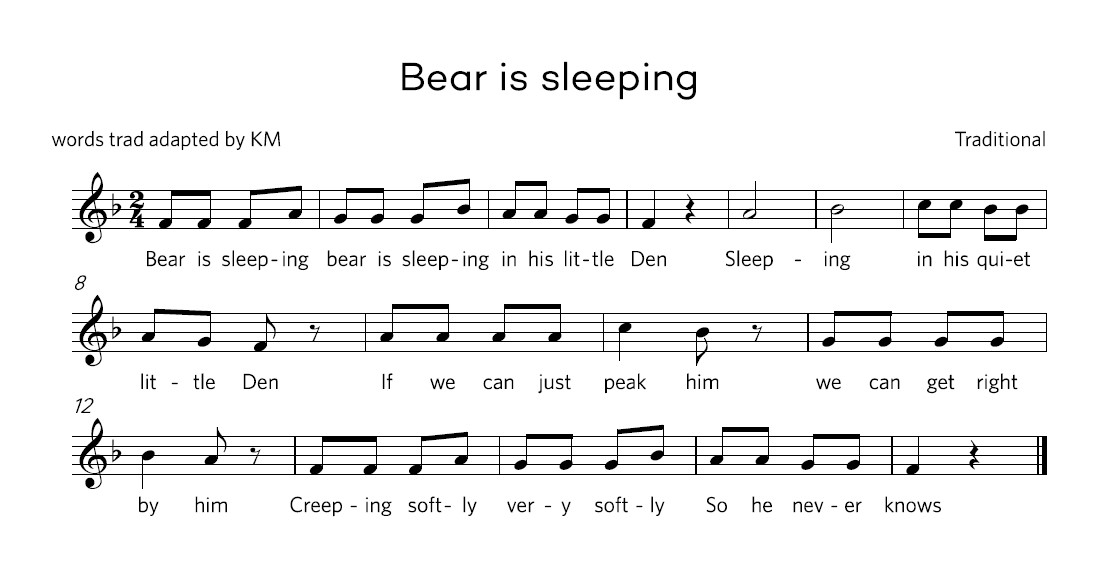
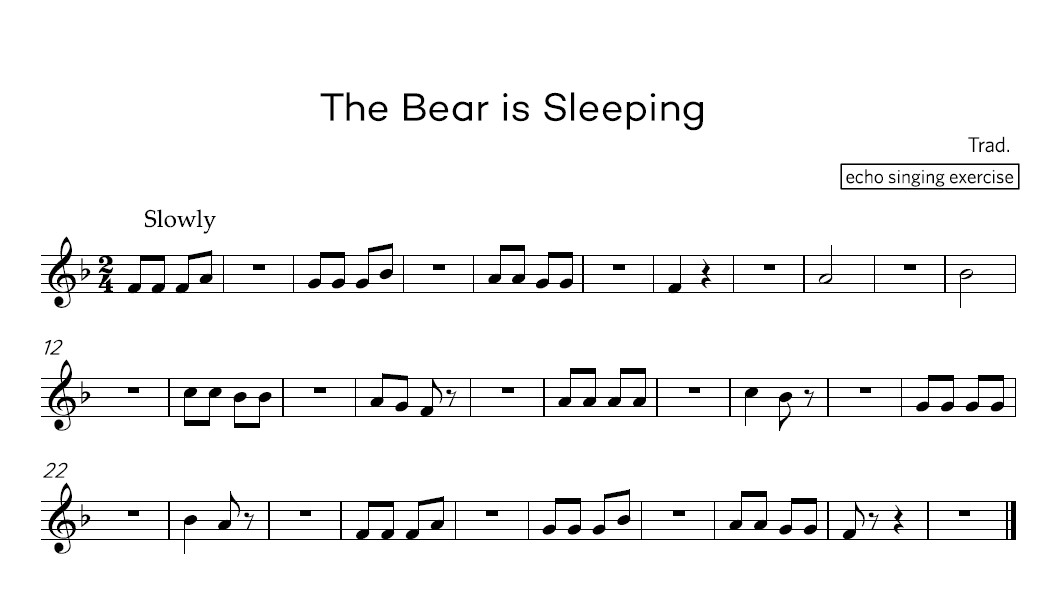
Here is the song, the arrangement is slightly longer than the song to make the most of the learning experience. Can your pupil clap the rhythm? Can they sing a phrase? Ask them to put dynamics into their performance as written and breathe between the phrases. Get them to play the melody on the piano (either using the music or by ear). Encourage your pupil to think about the words as they play to make it more expressive. Below you can see a 1-bar melody and then an empty bar where your pupil can respond.
Here's some suggested words you can use if you get stuck.