Presenting children's work
Graphic Scores
Graphic scores provide an accessible approach to recording music for younger learners who cannot yet read or write music on the stave. There are composers who utilise graphic scores. One example you may wish to explore is John Cage’s ‘Aria.’
Graphic scores can provide a starting point for discussion on the musical elements or interrelated dimensions of music, as you will see in the examples below.
Early stages of Graphic Scores
With these cards, we can experiment with vocal or body percussion effects, whilst also discussing the musical elements.
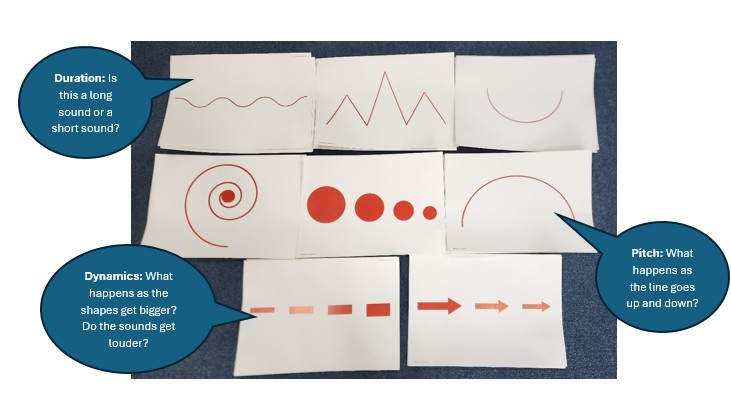
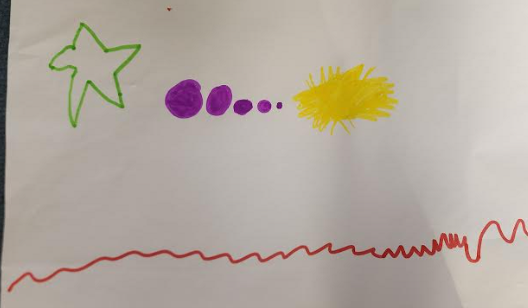
Children can begin to use these symbols and shapes to create their own basic compositions:
Developing your Graphic Scores
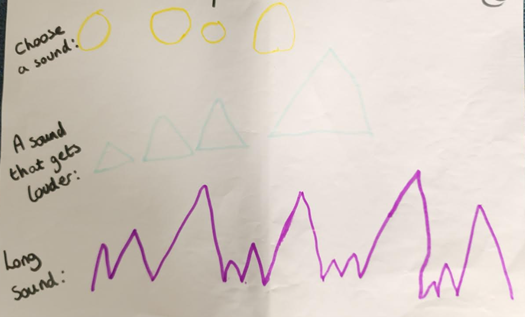
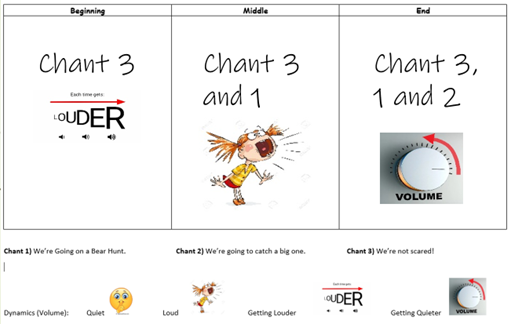
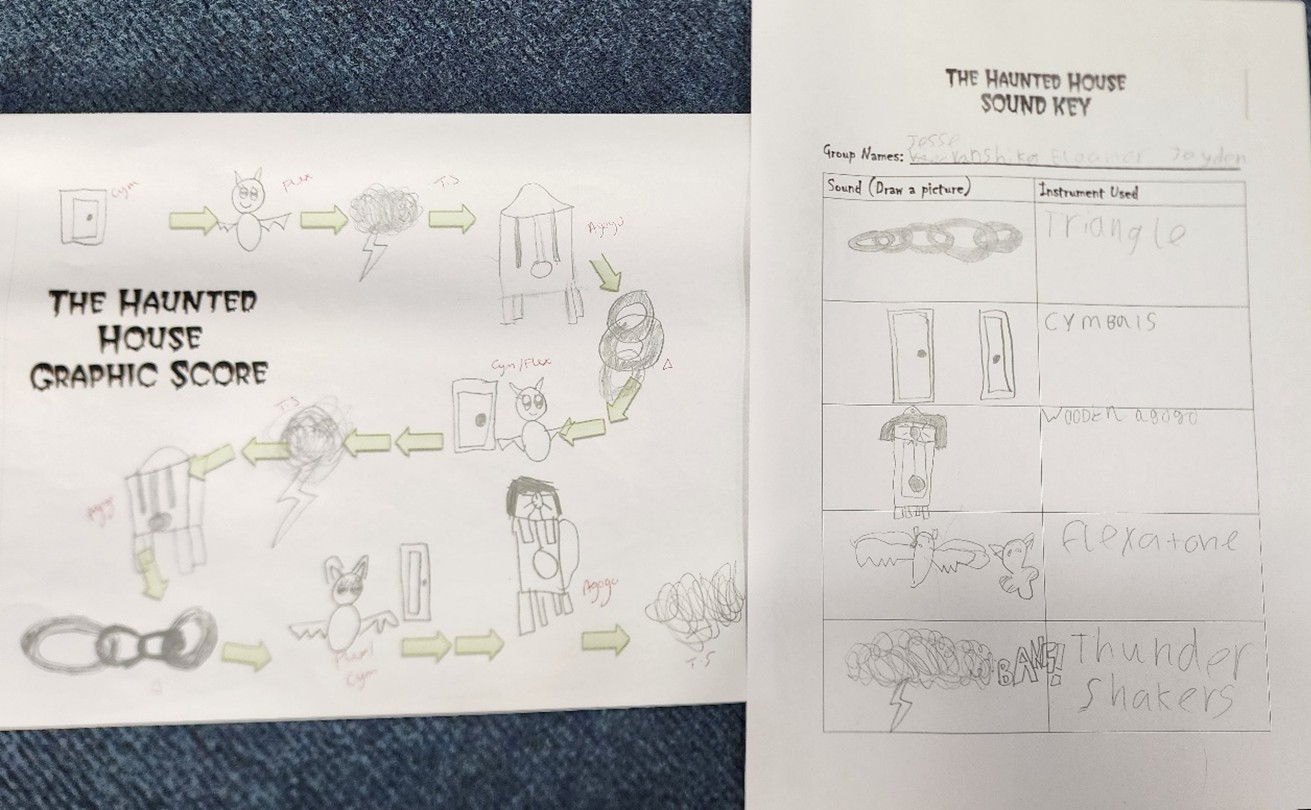
As children progress, you can begin to add a sense of structure. This could be as simple as having arrows pointing to the next sound or creating a piece with a beginning, middle and end.
You can see in the example below that there is also a context for the composition. Having to choose appropriate sounds leads to a discussion about timbre.
Rhythm Grid Development Examples
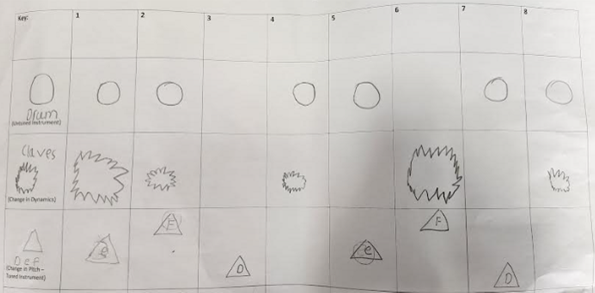
Rhythm grids can be introduced to give children a sense of the pulse. Initially, rhythm grids can include pictures. You can see the sizes have changed to show dynamics and the positioning of the shapes on the final row denote changes in pitch.
As children progress to more formal notation, dots or stick notation can be introduced. You will notice in the example below that some boxes contain two dots, denoting paired quavers.
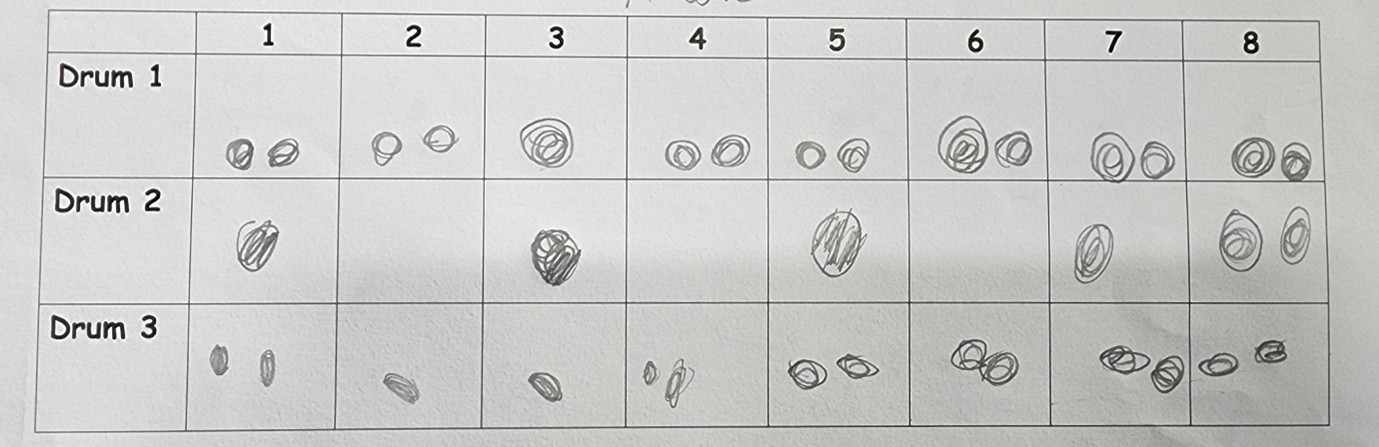
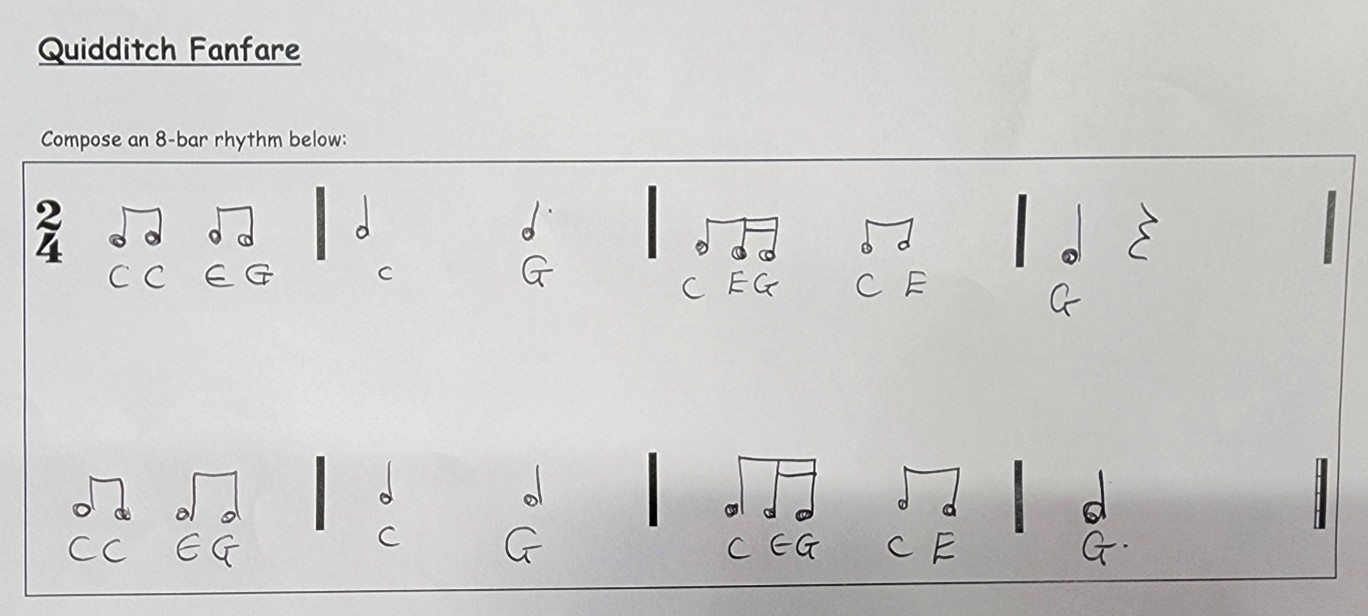
Eventually, children can progress to using the correct symbols to show duration. Note that in this example the pupils have also begun to explore pitch, writing the note names underneath.
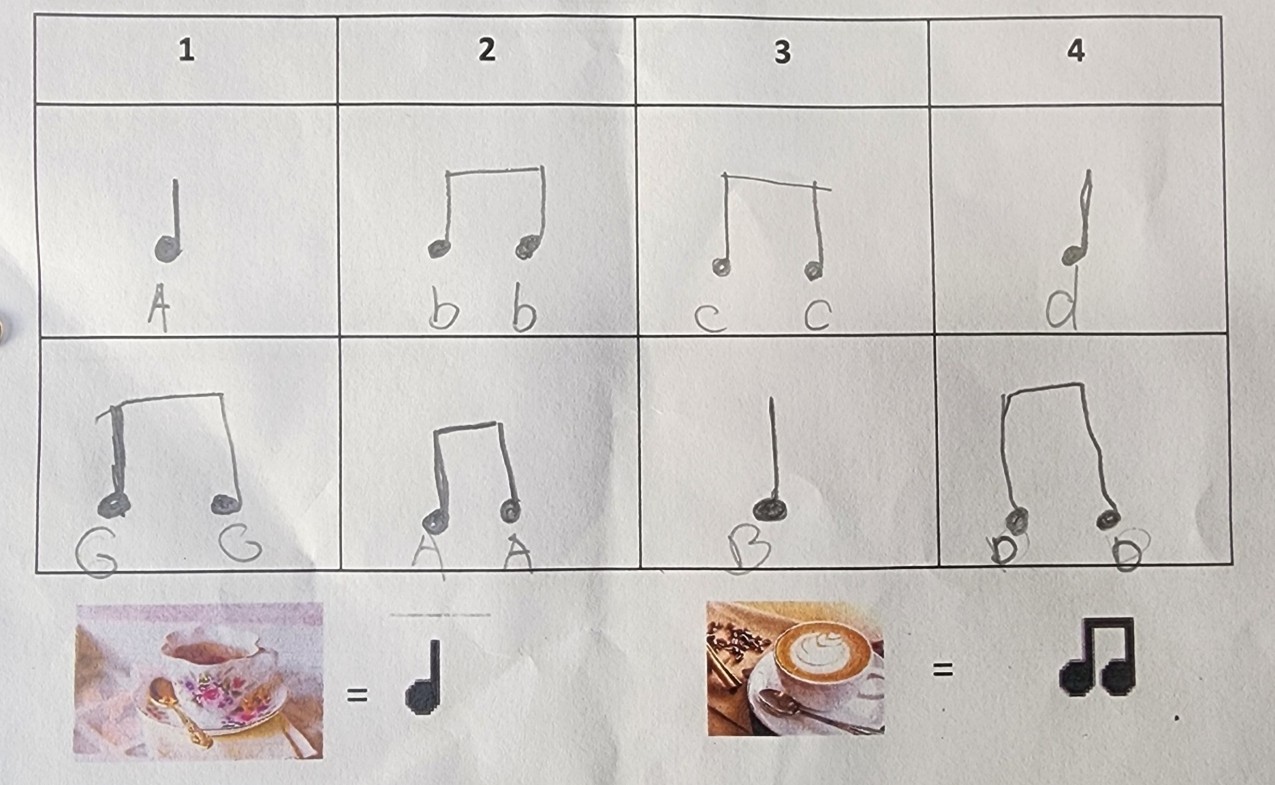
The rhythm grids can eventually be replaced for bars, leading onto staff notation: