
The Waltz by Tchaikovsky: Lesson Ideas
Completion requirements
2. Pitch
The development of the shifting technique
The understanding of the shifting technique in this piece is very important as a wide range of positions are present. All instrumental teachers know the difficulties and consequences of fingering writing in music, when these are excessive and on most of the notes. Pupils end up struggling with their music reading and the ability to decide their own fingerings when approaching a new piece of music. I came up with a strategy to help pupils identify positions and shifts without necessarily writing a lot of numbers on the notes:
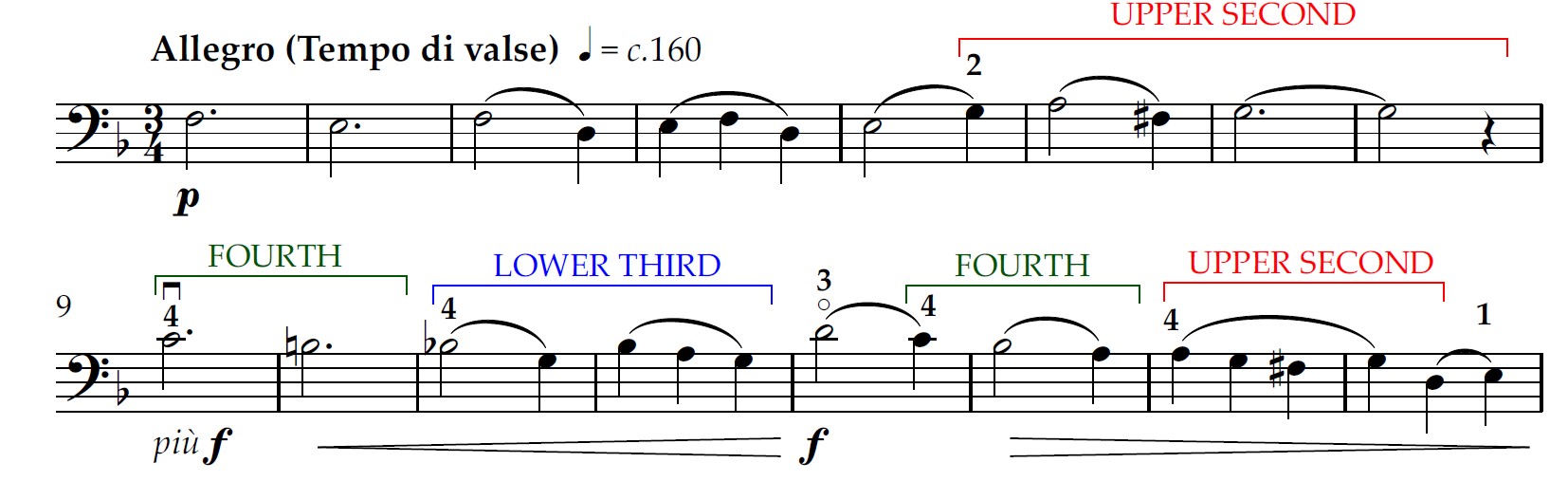
I keep a number of different erasable colour pens in my bag and together with my pupil we choose different colours for each position. By drawing brackets to contain the notes played in one position the pupil can preempt the shift and prepare for it properly, without hesitating too much about the fingering. I prefer this option when developing the understanding of the fingerboard’s geography, rather than writing a lot of numbers on the notes. This strategy is particularly useful for those pupils that can relate well to visual help in their music.
Same Finger Shifting exercise
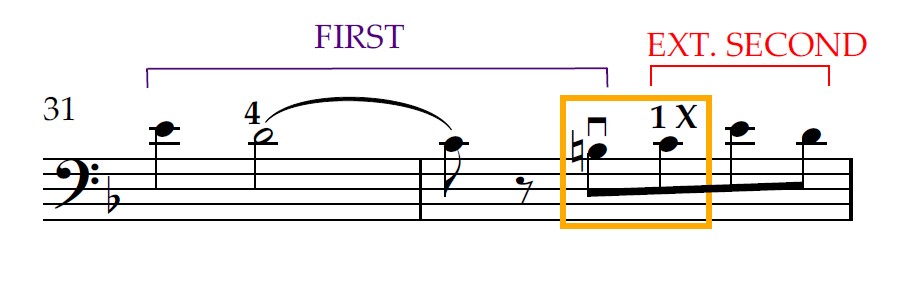
On bar 31 we have a clear example of the need to develop the ability to shift with the same finger correctly so as to prepare a new position, in this case with an extension.
Choose a note and a finger on any string. Ask your pupil to play the note and sing it. Follow up by singing a major scales from that note going up (at least 5 notes if an is octave not possible). Then ask your pupil to play the scale with only the one chosen finger by shifting for each single note. This exercise is excellent for showing the preparation and anticipation needed in the movement as well as the concept of “weight into the string”.
The understanding of the shifting technique in this piece is very important as a wide range of positions are present. All instrumental teachers know the difficulties and consequences of fingering writing in music, when these are excessive and on most of the notes. Pupils end up struggling with their music reading and the ability to decide their own fingerings when approaching a new piece of music. I came up with a strategy to help pupils identify positions and shifts without necessarily writing a lot of numbers on the notes:
I keep a number of different erasable colour pens in my bag and together with my pupil we choose different colours for each position. By drawing brackets to contain the notes played in one position the pupil can preempt the shift and prepare for it properly, without hesitating too much about the fingering. I prefer this option when developing the understanding of the fingerboard’s geography, rather than writing a lot of numbers on the notes. This strategy is particularly useful for those pupils that can relate well to visual help in their music.
Same Finger Shifting exercise
On bar 31 we have a clear example of the need to develop the ability to shift with the same finger correctly so as to prepare a new position, in this case with an extension.
Choose a note and a finger on any string. Ask your pupil to play the note and sing it. Follow up by singing a major scales from that note going up (at least 5 notes if an is octave not possible). Then ask your pupil to play the scale with only the one chosen finger by shifting for each single note. This exercise is excellent for showing the preparation and anticipation needed in the movement as well as the concept of “weight into the string”.