
Chez le Docteur by Satie: Lesson Ideas
Completion requirements
2. Pitch
Ask your student to identify scale and arpeggio-like patterns in the piece. Examples of these are:
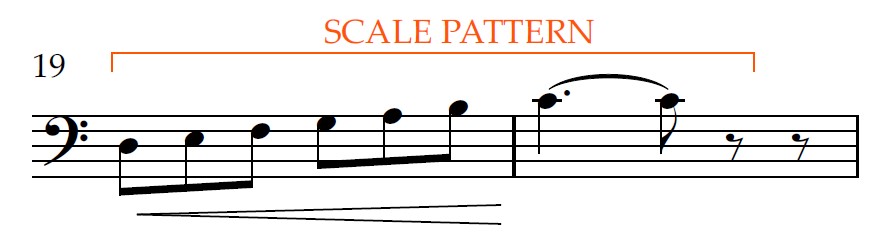
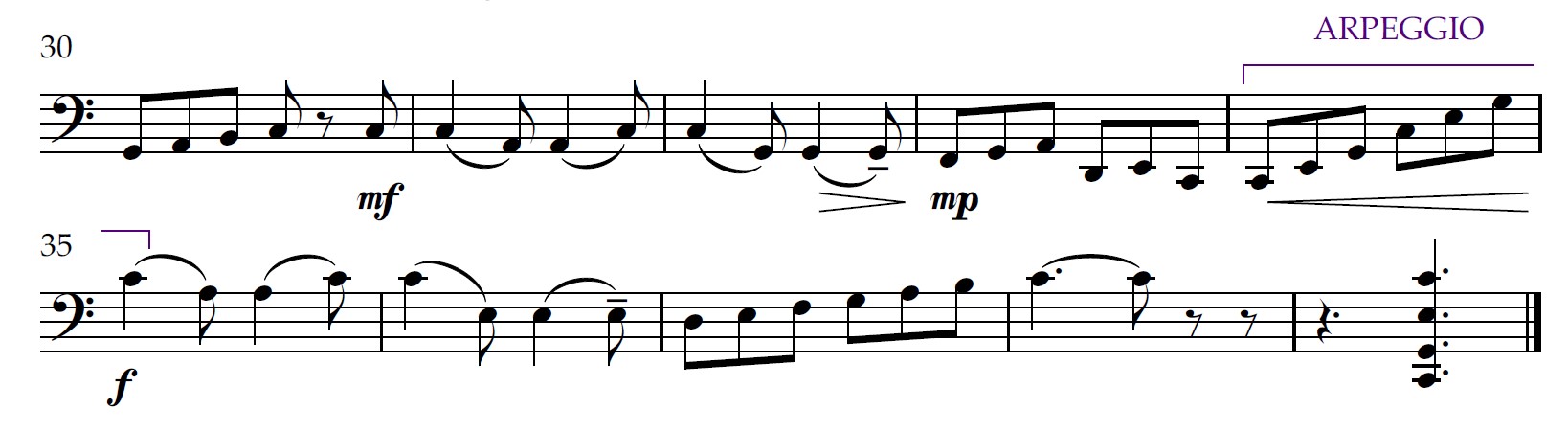
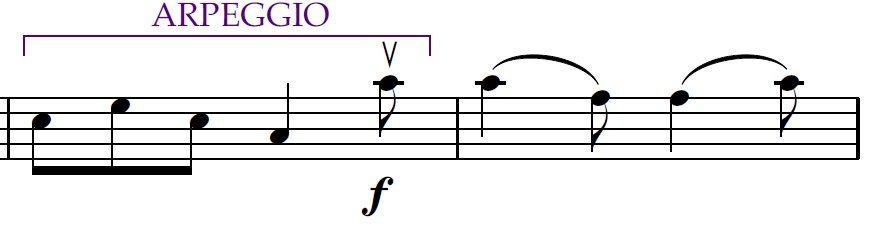
Talk through how these compare to the ones learned in the scales and arpeggios. What note is missing in the scale pattern at bar 19 to play a whole octave? Do we have all the arpeggio notes in bars 34 and 35 and, if so, how many octaves long is the arpeggio?
Suggest your student plays a two bar improvisation in 6/8 time with the notes of the arpeggio. As there are a lot of these patterns in the piece, talk about string crossing for the left hand and how the fingers move independently.
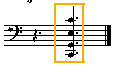
The chord at the end of the piece is probably the first four note chord most cellists at Grade 3 level will have played. Ask your student to play the notes separately first. It is important to explain at this point that the movement required for the bow to play all four notes needs to be one that follows the shape of the bridge.
Talk through how these compare to the ones learned in the scales and arpeggios. What note is missing in the scale pattern at bar 19 to play a whole octave? Do we have all the arpeggio notes in bars 34 and 35 and, if so, how many octaves long is the arpeggio?
Suggest your student plays a two bar improvisation in 6/8 time with the notes of the arpeggio. As there are a lot of these patterns in the piece, talk about string crossing for the left hand and how the fingers move independently.
The chord at the end of the piece is probably the first four note chord most cellists at Grade 3 level will have played. Ask your student to play the notes separately first. It is important to explain at this point that the movement required for the bow to play all four notes needs to be one that follows the shape of the bridge.